
Nutrients of the Estuary
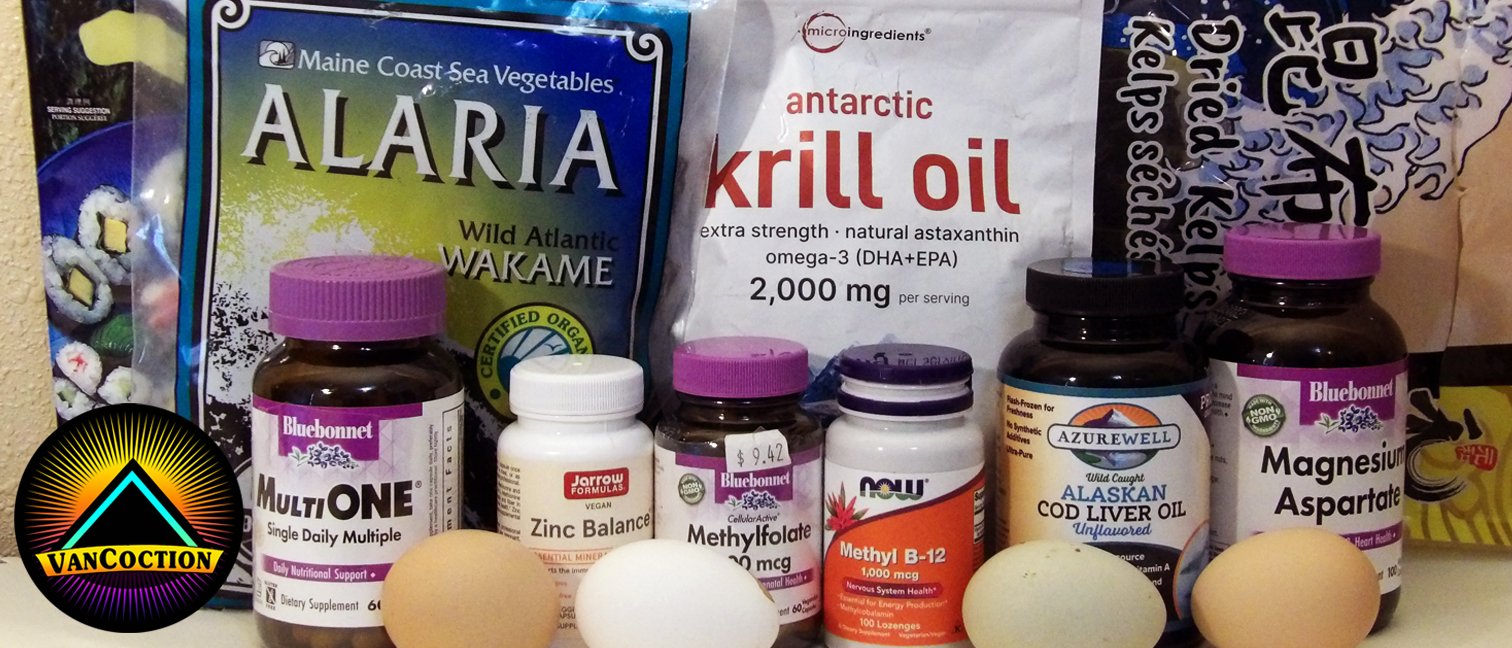
The foods and supplements we use day to day to help balance and restore the body.
What is an estuary?
An estuary is where rivers meet the sea, creating one of the richest environments for life on Earth. Fresh water, salt water, minerals, plants, microorganisms, shellfish, fish, birds, and their eggs all come together here. Our bodies are much the same. We are living environments filled with water, salts, microorganisms, and trillions of cells that constantly need nutrients and building materials to survive.
For most of human history, getting those materials wasn't as simple as opening the refrigerator or ordering them online. Imagine walking hundreds of miles for seasonal runs of fish, or for shellfish when other foods were scarce. For more than 4,000 years Eulachon fish oil was carried from the Pacific Ocean over the Rocky Mountains into the Canadian interior. 7,500 years ago salt was being traded in Eastern Europe.
Today these things can seem almost too ordinary to matter. Salt sits in a shaker. Fish oil comes in a capsule and sardines come out of a little tin. . Yet foods like eggs, fish, shellfish, seaweed, leafy greens, legumes, and liver provide materials our bodies have depended upon throughout human history. Something doesn't become less essential simply because it has become easy to obtain.
The foods, nutrients, supplements, and simple practices below are some of the things we personally use to help give our bodies the materials and conditions they need for good health.
Phospholipids
Phospholipids are the primary building materials our bodies use to make cell membranes—the thin, flexible barriers surrounding every cell and many of the little structures inside them. Our bodies continually build, repair, and replace these membranes, so getting plenty of phospholipids in our diet is important. Not all phospholipids are exactly alike. Different foods provide different types of phospholipids and different fatty acids attached to them. For this reason, we like to get phospholipids from a variety of sources, including eggs, sunflower lecithin, fish and shellfish, and krill oil.
Concentrated Phospholipid Sources
Unbleached Sunflower Lecithin (Liquid)
One tablespoon (about 15 grams) provides approximately 10 grams of phospholipids, making sunflower lecithin an exceptionally concentrated source. Its fatty acids are predominantly omega-6, so if sunflower lecithin is your primary supplemental source, we recommend also getting omega-3 fats from fish, seafood, krill oil, or fish oil. https://www.amazon.com/dp/B07HGGP5SL
Krill Oil
Three capsules (3 grams) of the krill oil we use provide 600 mg of phospholipids. Krill oil also provides the marine omega-3 fatty acids EPA and DHA, some carried as phospholipids.
https://www.amazon.com/dp/B0C35GYDV3/
Phospholipid Sources in Foods
Approximate phospholipid content per 100 g (3½ oz) of food — roughly a meal-sized portion.
Egg yolks — 8,500 mg
Whole eggs — 2,500 mg
Livers — 1,900 mg
Small oily fish — 1,200 mg
Shellfish — 900 mg
Fish — 900 mg
Meats — 700 mg
Nuts — 350 mg
Seeds — 350 mg
Cheese — 350 mg
Beans/Legumes — 180 mg
Higher-fat fruits — 150 mg
Dairy — 80 mg
Whole grains — 80 mg
Vegetables — 50 mg
Most fruits — 20 mg
Feeding Our Living Environment
We aren't feeding only ourselves. We are also feeding the enormous community of microorganisms living in and on our bodies. The foods we eat provide materials for our own cells and membranes, while other parts of those foods nourish the microorganisms that help maintain the environment in which those cells live.
Seaweed — Wakame, Kelp and Nori
Seaweed is a remarkable food. Like us, its cells depend on flexible membranes built from phospholipids and other lipids. Marine algae are also the original source of much of the omega-3 fats that eventually make their way through the marine food chain into fish, shellfish, and ultimately us. Seaweed provides iodine along with other minerals and trace elements. Iodine is essential for making thyroid hormones, which help regulate energy use, growth, temperature, and metabolism throughout the body.
Wakame https://www.amazon.com/dp/B001HTKNEQ
Kelp https://www.amazon.com/dp/B001HTKNFA/
Nori https://www.amazon.com/dp/B01ESBNFGC/
Leafy Greens — Folate
Leafy green vegetables are one of our favorite ways to get folate. In fact, the name folate comes from the Latin word for leaf. Folate is needed for making and renewing cells, producing DNA, and many of the chemical reactions that keep our bodies functioning. Spinach, romaine lettuce, asparagus, broccoli, and other greens are simple ways to keep folate coming into the body regularly. When additional folate is needed, supplemental forms are also available.
Chickpeas — Folate and Raffinose
Chickpeas, or garbanzo beans, provide folate, protein, fiber and something particularly interesting: raffinose, a carbohydrate that we don't completely digest ourselves. Instead, it travels into the large intestine, where bacteria ferment it, helping feed our intestinal microbiome. The gas beans sometimes produce is evidence that this fermentation is taking place. Interestingly, after eating beans regularly, we now experience very little gas from them. Chickpeas are one of our everyday foods, especially as hummus—a delicious way to feed ourselves while also feeding the community living inside us.
→ Our Recipe & Video: Hummus From Us — The Best Hummus Ever
Mushrooms and Mushroom Coffee
Mushrooms contain complex carbohydrates and other compounds that interact with our intestinal microbiome. Rather than drinking regular coffee every day, we have started using mushroom coffees such as RYZE and Everyday Dose, as well as more caffeinated versions. We believe this change has been beneficial for our own intestinal microbiomes, and it is an easy way for us to regularly include mushroom-derived compounds in our diet.
Filling the Nutritional Gaps
Our diets don't always provide everything we need in the amounts we need it. These are some of the vitamins, minerals, and other nutrients we use to help fill those gaps.
Riboflavin — Vitamin B2
Riboflavin helps our cells transfer electrons and turn food and oxygen into usable energy. Much of this energy production takes place across the membranes inside our mitochondria. B2 also supports antioxidant systems that help protect our cells and their membranes from damage. B2 does so many important jobs in the body that we wrote an entire article about it:
Vitamin B2: The Spark of Life
We take 100 mg once a day. https://www.amazon.com/dp/B000MGSH1Q
Methylated B Vitamins
Several B vitamins work together in a recycling process called methylation. It helps our bodies make and renew cells, regulate genes, process homocysteine, and make many of the molecules our cells need. Folate and vitamin B12 are especially important to this process. We prefer methylated forms of folate and B12 because they provide forms that are already closer to what the body uses, reducing some of the conversion steps required before they can participate in these reactions. https://www.amazon.com/dp/B0DLLHRVLY
Multi-Vitamins
Provides a broad base of essential vitamins and minerals to help fill nutritional gaps.
https://www.amazon.com/dp/B00BZ4NN9U/
Cod Liver Oil (DHA Source)
Supplies long-chain omega-3 fats (including DHA) along with vitamins A and D, supporting membrane signaling and overall balance. Use Krill oil for phospholipids.
https://www.amazon.com/dp/B0D3T12XYP/
Movement
Our bodies were made to move. Movement helps circulation, lymphatic flow, breathing, digestion, muscles, joints, and the exercising of our cells and systems.
My wife Vanessa and I play about 30 minutes of tennis every day, and each works out individually for about another 30 minutes. I do Wim Hof-style breathing exercises a couple of times a week and often play disc golf. Vanessa also dances regularly. We don't think exercise has to be complicated. What matters most to us is making movement a regular part of everyday life.
Supporting the Body from the Outside
The middle of our body is an extraordinarily busy place. The stomach, intestines, liver, pancreas, kidneys, lymphatic vessels, blood vessels, muscles, and other tissues are packed together in a relatively small space. We hear good results from people regularly applying VanCoction salves around the belly. It also helps keep us regular.
We use Simple Salve over the entire abdomen before bed, then wear a T-shirt to sleep.
The 30-Day Belly Ritual
https://www.vancoction.com/news/30-day-belly-ritual
The Breathing, Pumping Belly
https://www.vancoction.com/news/the-breathing-pumping-belly
Our bodies, like estuaries, are not static. Materials are constantly coming in, being used, recycled, moved, and carried away. Trillions of cells need to maintain their membranes, our microorganisms need to be fed, and our bodies need vitamins, minerals, fatty acids, water, and movement to keep the whole living environment working together.
Good health comes from making sure the things our bodies have always depended upon aren't missing. Many of them are remarkably simple: eggs, fish, shellfish, greens, beans, seaweed, minerals, movement, sunlight, and rest. These things can seem ordinary because they are familiar, but ordinary doesn't mean unimportant.
Often, the simplest things are the things keeping us alive.
Related Articles
The Birth of Living Cells
Life began when nature learned to capture energy and contain it. Explore how electron transfer and membranes made cells—and ultimately all living things—possible. This introduces Riboflavin - Spark of Life.
→ The Origins of Life:Electron Transfer & Membranes
Riboflavin - The Spark of Life
Riboflavin is the vitamin that keeps your cellular engine firing. Learn how vitamin B2 powers energy production, protects tissues, and supports nearly every system in the body.
→ Vitamin B2: The Spark of Life
Cellular Aging & Phospholipids
Cell membranes are constantly repaired, replaced, and rebuilt throughout life. Explore how phospholipids support membrane structure, signaling, renewal, and the body’s ability to maintain healthy tissues.
→ Reverse Aging: Cell Renewal
Continue Exploring
Curiosity has a way of leading to unexpected places. Explore the articles below and discover new ideas, old knowledge, practical routines, and the hidden connections that shape how we feel and function every day.
Simple Salve
Two ingredients. Thousands of years of historical use. Discover the science behind Simple Salve and why castor oil and beeswax have remained trusted for generations.
→ Simply Perfect: Simple Salve
The Breathing, Pumping Belly
Beneath every breath is a hidden world of pressure, motion, and rhythm. Explore how breathing and the abdomen naturally work together to balance circulation, flexibility, and fluid movement.
→ Explore Breathing: Pump Up The Belly
EP4 Receptors
Protective surface linings throughout the body depend on fluid movement, hydration, and stable membrane barriers. Explore how these receptors support our most delicate protective systems.
→ Maintain: Natural Barrier Protection
EP3 and Histamine
Histamine is part of the body’s natural response system, but movement and fluid clearance help determine whether allergies and irritation linger or resolve.
→ The Science Behind: Managing Allergies