
Aging & Cell Renewal: The Role of Phospholipids
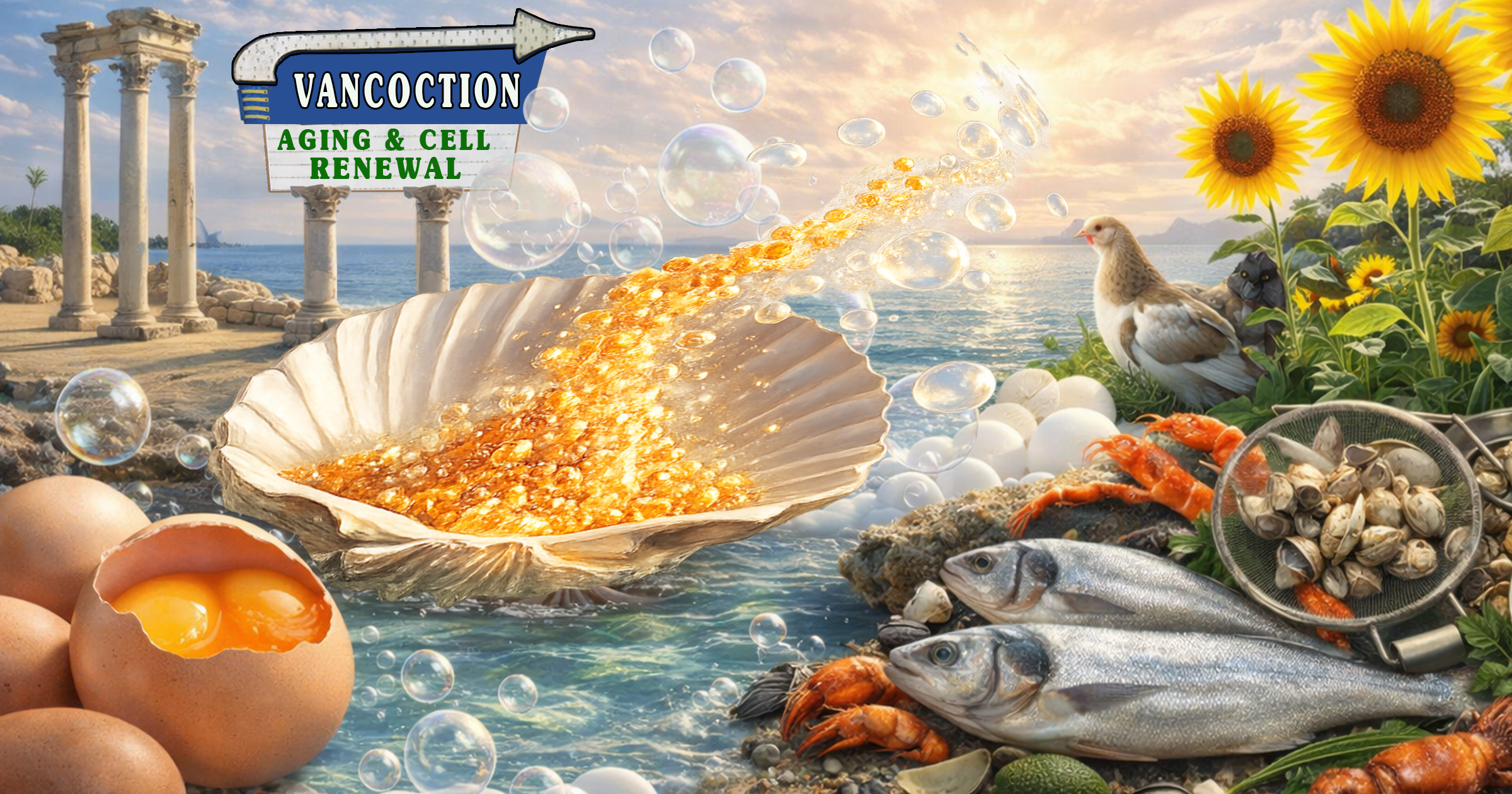
Phospholipid-rich foods provide the building blocks needed for cell membranes and renewal, and slowing down the aging process.
How the Body Renews Itself
Cells in the body have definitive lifespans. For the body to function at its best, it must constantly replace old and worn-out cells. It does this by generating new cells from existing ones.
For one cell to become two, new membranes must be built to enclose each daughter cell. These membranes are made from phospholipids. If phospholipid availability is insufficient, the cell cannot properly construct these membranes. As a result, cell renewal is limited, and the production of new cells is reduced. Over time, this leads to a gradual decline in tissue quality and function — a defining characteristic of aging.
Life Takes Place Within Cell Membranes.
Membranes are thin, flexible layers that maintain structure and regulate boundaries in the body. The skin forms a protective membrane, the lining of the gut is a membrane, and every cell is enclosed by one.
These membranes are not static barriers. They are active surfaces where fluids, gases, and nutrients are exchanged. Their structure determines how well this exchange occurs. When membrane quality is high, movement and communication are efficient. When it is poor, everything slows.
What Happens When Cell Renewal Slows
When cell renewal slows, the effects extend beyond simply producing fewer new cells. Tissues begin to lose their ability to fully repair and maintain themselves.
Instead of complete renewal, the body shifts toward partial maintenance — keeping structures functional, but not optimal. Over time, this leads to thinner tissues, reduced resilience, slower recovery, and a gradual loss of function.
In this case, the issue is not that the “membrane of the organ” is thinning directly, but that fewer new cells are being produced to maintain the tissue. The body prioritizes critical functions, so reductions in renewal are often seen first in less essential surface tissues like the skin.
A similar pattern can occur in the intestinal lining, where rapid turnover is required to maintain a strong barrier. When renewal is limited, barrier function can weaken.
Even in tissues that are not rapidly replaced, such as neurons, membranes must be continuously maintained through repair and remodeling of their phospholipid structure.
Mitochondria, which produce cellular energy, rely on their own intact membranes and are continuously renewed through growth, division, and remodeling. These processes also require phospholipids to build and sustain mitochondrial membranes. When this renewal is impaired, energy production declines as mitochondrial function and turnover are reduced — another defining characteristic of aging.
Stem cells maintain tissues by continuously producing new cells. This process depends on the ability to build new membranes with each division. When this capacity declines, tissue renewal slows and function gradually deteriorates.
Aging and the Decline in Cell Renewal
The body can produce some phospholipids, but this baseline production is designed to support essential needs — not optimal function.
The body can only build and maintain itself to the extent that phospholipids are available. When they are insufficient, cell replacement falls short — and this appears as aging itself: thinning tissues, impaired circulation, plaque buildup, reduced oxygen delivery, biofilms, declining cellular energy, and the gradual loss of normal function.
All cells require membranes, and membranes require phospholipids. Phospholipids are not supporting nutrients — they are the structure itself. They form the physical barrier that allows cells to exist and function.
We may not be able to change our DNA, but we can control our diet. What we eat determines our supply of phospholipids — and with it, whether the body can fully replace its cells and maintain its tissues.
Albert Wilking
Related Articles
Riboflavin - The Spark of Life
Riboflavin is the vitamin that keeps your cellular engine firing. Learn how vitamin B2 powers energy production, protects tissues, and supports nearly every system in the body.
→ Vitamin B2: The Spark of Life
The Birth of Living Cells
Life began when nature learned to capture energy and contain it. Explore how electron transfer and membranes made cells—and ultimately all living things—possible.
→ The Origins of Life:Electron Transfer & Membranes
Nutrients Of The Estuary
What we use and where to find it. A straightforward list of foods and nutrients that support membranes, movement, and the balanced conditions the body is built to maintain.
→ Natural Sources: Natural Nutrients
Cellular Aging & Phospholipids
Cell membranes are constantly repaired, replaced, and rebuilt throughout life. Explore how phospholipids support membrane structure, signaling, renewal, and the body’s ability to maintain healthy tissues.
→ Reverse Aging: Cell Renewal