
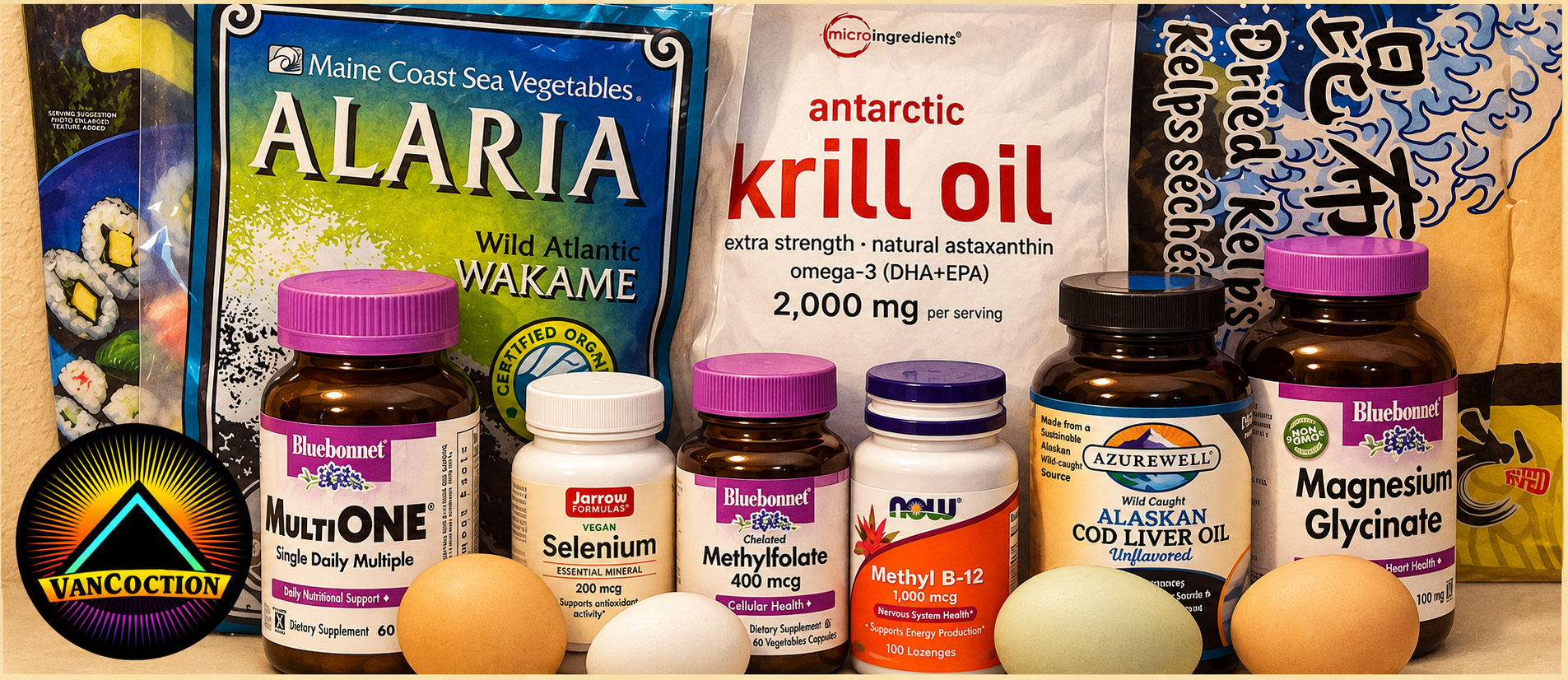
Let’s first start with the basics and then we’ll move through the nutrients and routines we need to keep our membranes, mitochondria, and microbiomes working together for strong immunity, vitality, and healthy aging.
Understanding how estuaries work is key to understanding our own bodies. Estuaries are called “The Nurseries of the Sea”. They form along sheltered coast lines where fresh inland waters meet the salty ocean. Here, the rising and falling tides spread oxygen and nutrients and wash away what isn’t needed.
Our bodies are like estuaries. We thrive when protected from the environment by our skin and other membranes. When we have enough oxygen and nutrients, and the byproducts of metabolism are carried away, our bodies will perform optimally.
The rhythmic ebb and flow of the tides keeps an estuary healthy. We also need regular routines for good health. Which ones do we need?
We need a constant flow of incoming nutrients and it would be very difficult to determine exactly which ones you are getting. The following chart shows the required nutrients for your health. How would you possibly know if you were getting enough of any particular nutrient?
Through our research we developed the following list. Some of the smallest amounts needed are some of our most essential.
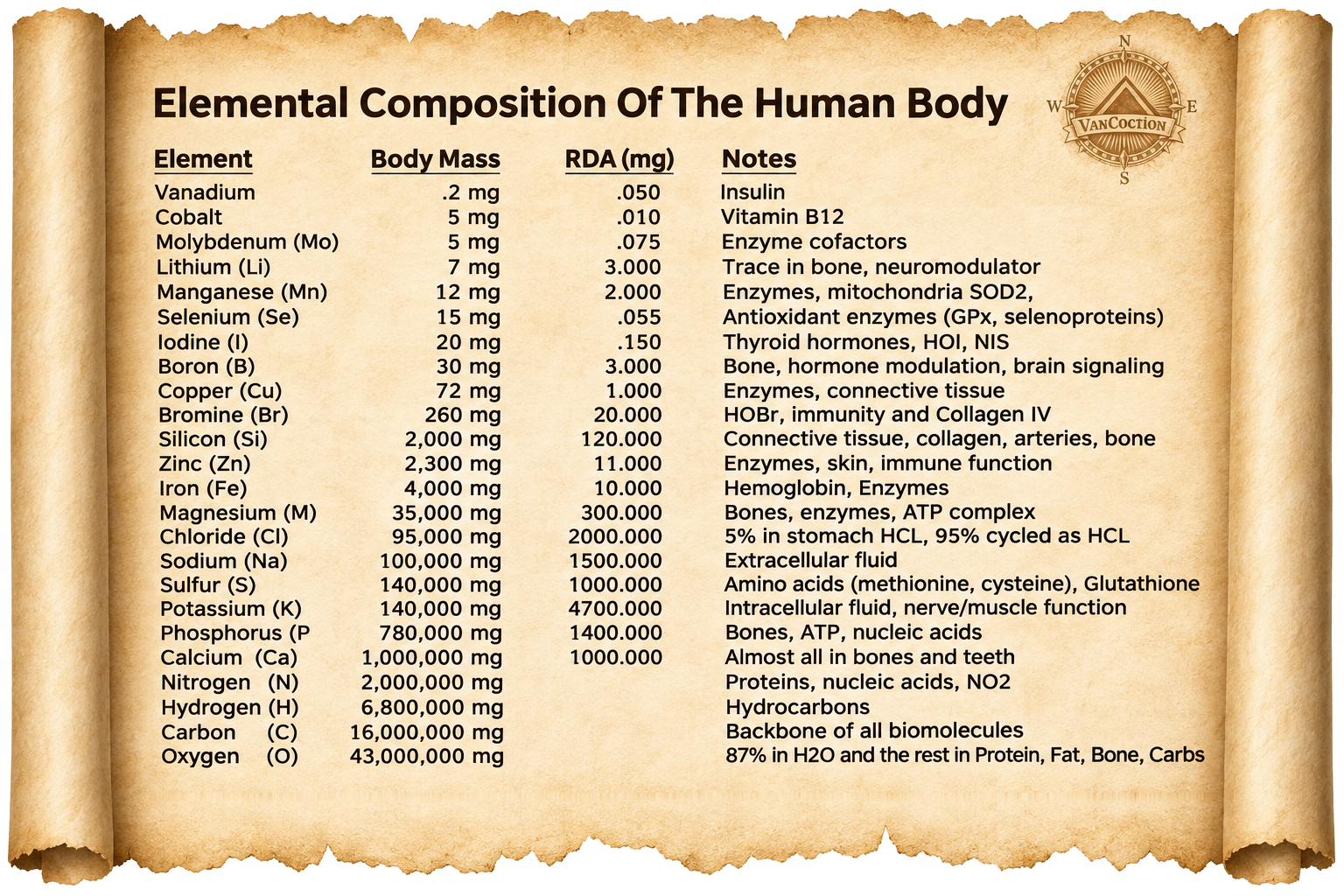
Because of the complexity of this list, we suggest regularly taking a multivitamin that covers as many of them as possible.
Multi-Vitamins
Provides a broad base of essential vitamins and minerals. Make sure it has a good vitamin C.
Scurvy is used as an example of extreme vitamin C deficiency. Even a slight deficiency of vitamin C can cause health problems.
https://www.amazon.com/dp/B00BZ4NN9U/
Magnesium
Check your multivitamin for magnesium. It may not have a lot of it. We suggest magnesium glycinate. Magnesium is required for more than 300 metabolic processes.
Methylated B Vitamins
Many B vitamins work together in a recycling process called methylation. It helps our bodies make and renew cells, regulate genes, process homocysteine, and make many of the molecules our cells need.
https://www.amazon.com/dp/B0DLLHRVLY
Recycle Homocysteine
The recycling of homocysteine is a big part of the process of cleaning up the leftovers that the estuary does naturally. We may be getting all of the right incoming nutrients, but we also need the nutrients that do the clean up.
https://www.vancoction.com/news/balance-oxygen-sugar-immune
Constipation and Pooling of Resources
In the estuary, if the natural flow out of the tidal waters is blocked, disrupted or inhibited, contagion will follow. Common forms are algae and malaria. In our bodies if we are not cleaning out, disease will follow, infections, plaque in the arteries, arthritis, pain, and constipation will be the norm.
Clean out the gunk. https://www.vancoction.com/news/epsom-flush
Eat the Salve EP3 Receptors and Smooth Muscle Contractions
EXERCISE!
Movement helps make the input equal the output. Balanced circulation, lymphatic flow, breathing, digestion, muscles, joints, and the exercising of our cells and systems are required for good health.
The Young are flush with essentials.
They’re metabolically fired up.
Membranes need Phospholipids
Phospholipids are the primary building materials our bodies use to make cell membranes—the thin, flexible barriers surrounding every cell and the mitochondria inside of them. The little powerhouses that give us energy live in the inner membranes of our mitochondria.
If we don’t have healthy membranes,
we won’t have healthy mitochondria,
causing us to leak fluids,
and run low in energy.
Our bodies continually build, repair, and replace our membranes, so getting plenty of phospholipids in our diet is important. We like to get phospholipids from a variety of sources, including eggs, sunflower lecithin, fish, shellfish, and krill oil.
Phospholipid Sources in Foods
Approximate phospholipid content per 100 g (3½ oz) of food — roughly a meal-sized portion.
Egg yolks — 8,500 mg
Whole eggs — 2,500 mg
Livers — 1,900 mg
Small oily fish — 1,200 mg
Shellfish — 900 mg
Fish — 900 mg
Meats — 700 mg
Nuts — 350 mg
Seeds — 350 mg
Cheese — 350 mg
Beans/Legumes — 180 mg
Higher-fat fruits — 150 mg
Dairy — 80 mg
Whole grains — 80 mg
Vegetables — 50 mg
Most fruits — 20 mg
Krill Oil
Three capsules (3 grams) of the krill oil we use provide 600 mg of phospholipids. Krill oil also provides the marine omega-3 fatty acids EPA and DHA, some carried as phospholipids.
https://www.amazon.com/dp/B0C35GYDV3/
Unbleached Sunflower Lecithin (Liquid)
One tablespoon (about 15 grams) provides approximately 10 grams of phospholipids, making sunflower lecithin an exceptionally concentrated source. Its fatty acids are predominantly omega-6, so if sunflower lecithin is your primary supplemental source, we recommend also getting omega-3 fats from fish, seafood, krill oil, or fish oil.
https://www.amazon.com/dp/B07HGGP5SL
Hormones need Iodine
If you use a supplemental source of Iodine like Lugol’s, you need to be sure you are getting extra selenium. Not only is iodine in our hormones, it’s in our saliva and excreted by our stomachs. We believe its doing that because iodine kills bad bacteria. SIBO, small intestine bacterial overgrowth, might be caused by an iodine deficiency.
https://www.amazon.com/dp/B07NWNVN12
Iodine From Seaweed
Seaweed comes from the estuary. Like us, its cells depend on flexible membranes built from phospholipids and other lipids. It is also the original source of much of the omega-3 fats that eventually make their way through the marine food chain into fish, shellfish, and ultimately us.
Seaweed provides iodine along with other minerals and trace elements. Iodine is essential for making the thyroid hormones, which help regulate energy use, growth, temperature, and metabolism throughout the body.
If you have had your thyroid checked they may have told you about T3 and T4 hormones? The three and the four stand for the number of iodine molecules in the hormone!
Wakame https://www.amazon.com/dp/B001HTKNEQ
Kelp https://www.amazon.com/dp/B001HTKNFA/
Nori https://www.amazon.com/dp/B01ESBNFGC/
Membranes Folate
The name folate comes from the Latin word for leaf. Folate is needed for making and renewing cells, producing DNA, and many of the chemical reactions that keep our bodies functioning. Spinach, romaine lettuce, asparagus, broccoli, and other greens are simple ways to keep folate coming into the body regularly. They are also part of a multivitamin complex.
Mitochondria and Vitamin B2 — Riboflavin
Riboflavin helps our cells transfer electrons and turn food and oxygen into usable energy. Much of this energy production takes place across the membranes inside our mitochondria. B2 also supports antioxidant systems that help protect our cells and their membranes from damage. B2 does so many important jobs in the body that we wrote an entire article about it:
Vitamin B2: The Spark of Life
We take 100 mg once a day. https://www.amazon.com/dp/B000MGSH1Q
Cod Liver Oil (DHA Source)
Supplies long-chain omega-3 fats (including DHA) along with vitamins A and D, supporting membrane signaling and overall balance. Use Krill oil for phospholipids.
https://www.amazon.com/dp/B0D3T12XYP/
Microbiomes and Lactic Acid
How does a food like homemade sauerkraut ferment in a jar at room temperature and there isn’t any bad bacteria in it? The fermenting vegetables produce lactic acid that kill any bad bacteria. Our microbiomes are our first line of immune defense for us and our membranes.
https://www.vancoction.com/news/the-science-of-lacticil
Our bodies, like estuaries, are not static. Materials are constantly coming in, being used, recycled, moved, and carried away. Trillions of cells need to maintain their membranes, our microorganisms need to be fed, and our bodies need vitamins, minerals, fatty acids, water, and movement to keep the whole living environment working together.
Good health comes from making sure the things our bodies have always depended upon aren't missing. Eggs, fish, shellfish, greens, beans, seaweed, minerals, salt, movement, sunlight, and rest. These things can seem ordinary because they are familiar, but ordinary doesn't mean unimportant.
The simplest nutrients and healthy routines are keeping us alive.
Albert and Vanessa Wilking